Why Exposing Fake Mediums and Ghost Hunting Fraud Protects Real Spiritism
Many people who search for communication with spirits are not looking for entertainment. They are looking for meaning, comfort, truth, or a serious answer to a serious question. That is exactly why fraud matters. Exposing deception is not an attack on Spiritism. In many cases, it is a defense of everything serious, respectful, and morally disciplined within it.
- What Spiritism Was Never Meant to Be
- Fraud Existed from the Beginning
- From Séance Rooms to YouTube
- Ghost Hunters and the Business of Fear
- Fake Mediums and General Statements
- Red Flags You Should Never Ignore
- Not Every Unusual Case Is a Fraud
- When “Accidental” Videos Raise More Questions Than Answers
- What a Real Medium Would Never Do
- Fraud Does Not Disprove Spiritism
- Questions readers often ask
What Spiritism Was Never Meant to Be
Real Spiritism was never meant to become a theatre of fear, a collection of viral clips, or a commercial performance built around dramatic reactions. It was not created to entertain bored viewers, impress people with tricks, or turn grief into a market.
A serious approach to spirit communication does not begin with spectacle. It begins with discipline, humility, moral seriousness, and the willingness to separate what is genuine from what is exaggerated, manipulated, or entirely fabricated.
This matters because once the whole subject is turned into a show, truth becomes secondary. Instead of asking, “What really happened?” people start asking, “What will get attention?” That is usually the moment when fraud enters through the front door.
Main idea: exposing deception is not hostility toward Spiritism. It is one of the clearest ways to protect it from being reduced to performance, manipulation, and noise.
Fraud Existed from the Beginning
This problem is not new. Even in the nineteenth century, when public interest in séances and mediumship was rapidly growing, there were already people mixing genuine questions with tricks, gimmicks, and staged effects. Where curiosity grows, exploitation usually follows.
Physical manifestations were especially vulnerable to abuse. If a room was dark, emotions were high, and the audience wanted to believe, almost anything could be made to look supernatural. Strange noises, table movement, hidden mechanisms, staged touches, manipulated objects, and carefully controlled conditions all created the same result: people left the room thinking they had seen proof.
The lesson is simple. Fraud does not appear because the subject is false. Fraud appears because the subject is powerful. People fake what attracts attention, money, influence, or emotional control.
From Séance Rooms to YouTube
The tools have changed, but the deception often has not. In earlier times, a fraudulent medium might need a dark room, hidden props, or carefully arranged assistants. Today the same effect can be produced with a camera, editing software, sound design, suggestive captions, and a thumbnail designed to trigger fear before the video even begins.
What used to happen behind curtains can now happen in post-production. What once depended on a small group in a séance room can now be packaged for thousands of viewers. The emotional structure is often identical: tension, uncertainty, a sudden “sign,” exaggerated reactions, and then a confident conclusion delivered before the audience has had time to think.
This is why modern paranormal content must be approached with the same caution that serious investigators once brought to physical séances. Technology did not remove the problem. In many ways, it made it easier to scale.
Ghost Hunters and the Business of Fear
One of the biggest modern problems is the rise of ghost hunting as content. Once fear becomes a product, pressure follows. If a team travels for hours to a supposedly haunted building, brings cameras, builds suspense, and needs a usable video at the end, the temptation is obvious: something has to happen.
That is why so much paranormal content follows the same pattern. A sound appears and someone says, “Did you hear that?” A shadow appears and someone says, “Did you see that?” The atmosphere itself does half the work. Suggestion fills in the rest.
In that setting, expectation becomes a machine. Once viewers and creators both want the experience to be real, ordinary noise starts sounding meaningful, random movement starts looking intentional, and fear begins interpreting everything in the room.
Why horror clichés are not good evidence
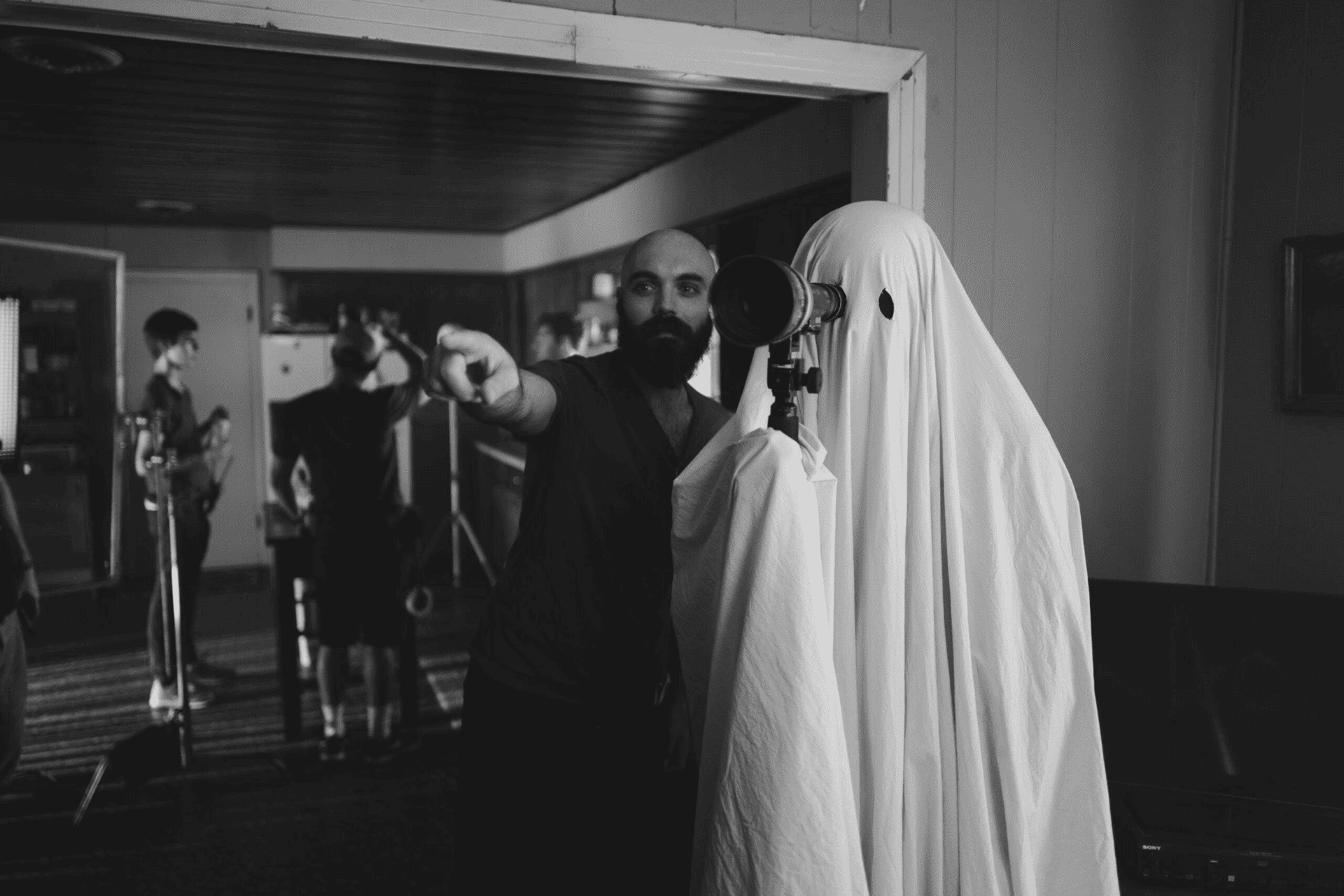
One obvious sign of fabricated paranormal content is when the “spirit” looks like a stock horror character: unnaturally white face, dark hair hanging forward, staged posture, perfect timing, ideal placement for the camera. That is not serious evidence. That is visual storytelling.
If spirits really looked like low-budget horror props every time they manifested through an apparition, the world would be a far stranger place than it is. In reality, when a spirit is perceived, it is typically understood in recognizably human terms, not as a costume designed to imitate a movie scene.
Fear is easy to manufacture. Serious evidence is not.
Fake Mediums and General Statements
The problem does not stop with ghost hunting. It also appears in private readings, staged public demonstrations, online messages, and emotionally manipulative “spiritual services.” One of the most common tools used by fake mediums is not supernatural insight at all. It is vagueness.
Instead of receiving precise information, they begin with statements that could fit almost anyone: “I sense a loss around you.” “There is a strong maternal presence.” “I feel someone who had difficulties before passing.” “You have been carrying emotional weight for a long time.” These are not proofs. They are invitations for the other person to fill in the blanks.
That is why general statements are so effective. People under emotional pressure naturally search for meaning, and vague language can feel deeply personal when someone wants it to be true. A fake medium often does not reveal information. The medium extracts it, piece by piece, from the reactions of the sitter.
Real mediumship, if genuine, should not depend on fishing for clues, collecting personal details, or forcing emotional confirmation. It should not need your full biography before it can begin.
This also applies online. Serious practitioners sometimes have to warn followers about fake profiles, cloned accounts, and scammers offering paid readings in someone else’s name. That detail matters because it shows how easily grief, trust, and spiritual curiosity can be exploited in the digital environment.
Red Flags You Should Never Ignore
Not every weak reading is a scam, and not every unusual video is fake. But some warning signs appear so often that they deserve to be stated clearly.
- The medium needs too much information. If the process depends on your name, background, losses, family structure, and emotional history before anything meaningful happens, caution is justified.
- The environment is controlled to prevent verification. Extreme darkness, selective camera angles, refusal of reasonable controls, or conditions that make observation impossible should immediately lower confidence.
- The language is broad and adaptable. Statements that fit almost everyone are not evidence of communication.
- Everything is theatrical. Rehearsed fear, perfect timing, dramatic pauses, and repeated overreaction often point more toward performance than toward investigation.
- Money is pushed aggressively. Emotional urgency plus commercial pressure is one of the clearest danger signals.
- A result is guaranteed. Any promise that contact will definitely happen should make you step back.
- The brand matters more than the truth. If a channel or personality is built on constant escalation, every new claim has to be bigger than the last one. That pressure rarely helps honesty.
Not Every Unusual Case Is a Fraud
It is important to say this clearly: not every strange case is fake. There are fabricated videos, exaggerated stories, and many cases of fear, suggestion, or poor interpretation. But that does not mean every unsettling incident can be dismissed with the same easy gesture.
In fact, some of the most interesting footage often does not come from paranormal channels at all. It comes from ordinary people who were not trying to build a ghost-hunting brand, sell a dramatic experience, or entertain an audience. A hiker, camper, driver, traveler, or person at home who unexpectedly records something disturbing may sometimes deserve more attention than someone whose entire channel depends on a new supernatural event every week.
That difference matters. When there is no obvious commercial motive, no prepared narrative, and no pressure to “produce a haunting,” the case may deserve a more careful look. It still needs discernment. It still needs caution. But it should not be thrown into the same pile as staged content built for clicks.
The point is not to deny the possibility of authentic phenomena. The point is to protect that possibility from being buried under noise.
When “Accidental” Videos Raise More Questions Than Answers
At the same time, not every “accidental” video is automatically trustworthy. This is where another kind of discernment is needed. Sometimes a clip looks more authentic because it does not come from a ghost hunter. But if you stop and think about the setup, new questions appear immediately.
Why is someone recording an apparently empty hallway for no clear reason? Why is a phone camera pointed at an ordinary shelf just before a cup falls from it? Why is a home security camera aimed at a strange, highly specific corner of the house that nobody would normally monitor? Why is the unusual event perfectly framed?
Authentic cases are usually unexpected, but they are rarely perfectly convenient.
That does not mean such videos are always fake. It means they should not be accepted uncritically just because they were presented as accidental. The absence of an obvious paranormal brand does not automatically prove authenticity.
The same applies to animal-themed clips. A camera pointed directly at a cat tree that then captures a “ghost cat” appearing exactly where the lens is focused may look intriguing, and yes, it can even be strangely funny, but it also raises an obvious question: why was the camera there in the first place?
Serious discernment asks both questions at once: “Could this be genuine?” and “Does this setup make sense?” Both matter.
What a Real Medium Would Never Do
A serious medium does not need to behave like a performer. That is one of the clearest contrasts between substance and imitation.
- A real medium would not build the entire process on collecting personal data first.
- A real medium would not pressure vulnerable people into repeated paid contact.
- A real medium would not treat grief as a business opportunity.
- A real medium would not try to impress through horror aesthetics or staged fear.
- A real medium would not pretend certainty when nothing clear is coming.
- A real medium would not need constant self-promotion to create artificial authority.
The most trustworthy spiritual work is usually quieter than people expect. It is less dramatic, less polished, less manipulative, and far less interested in branding. That does not make it weaker. It often makes it more credible.
Fraud Does Not Disprove Spiritism
This is the central point. The existence of fraud does not disprove the existence of truth. Counterfeit money does not prove that real money never existed. It proves only that something valuable is worth imitating.
The same is true here. False mediums, staged paranormal channels, manipulated ghost videos, and exaggerated stories do not prove that all spirit-related phenomena are empty. They prove that the subject is emotionally powerful enough to attract imitation, exploitation, and spectacle.
That is precisely why Spiritism should be severe with fraud. Not because it denies the possibility of real communication, but because it takes that possibility seriously enough to reject theatre in its place.
Truth does not need spectacle. And what is truly spiritual does not become stronger when it is exaggerated. It becomes clearer when noise is removed.
Questions readers often ask
Is exposing fake mediums an attack on Spiritism?
No. It is often the opposite. Exposing deception helps protect serious Spiritism from being confused with manipulation, performance, and commercial exploitation.
Do fake ghost videos mean all paranormal footage is false?
No. Some videos are clearly staged, while others may be based on fear, suggestion, or poor interpretation. But that does not automatically rule out the possibility that some cases are genuine and deserve careful attention.
What is one of the clearest warning signs of a fake medium?
One major warning sign is when the medium needs a large amount of personal information before anything meaningful happens. General statements that fit almost anyone are another strong red flag.
Why are ghost hunting channels often less convincing than accidental footage?
Because ghost hunting channels usually operate under pressure to produce a result. If the whole channel depends on fear, suspense, and new supernatural content, the temptation to exaggerate or stage events becomes much stronger.
Can a real medium work without knowing personal details in advance?
In principle, yes. If mediumship is genuine, it should not depend on collecting basic personal facts first. The more a reading depends on fishing for clues, the less convincing it becomes.
Are accidental paranormal videos automatically more credible?
Not automatically. Some deserve more attention because they were not created as paranormal content, but even “accidental” videos should still be examined carefully. The setup, camera placement, timing, and context all matter.