
Ian Stevenson: The Psychiatrist Who Studied Memories of Previous Lives
Ian Stevenson was one of the most unusual and controversial researchers ever to work at the border of psychiatry and survival studies. Rather than focusing on séances or dramatic physical phenomena, he became known for investigating young children who claimed to remember a previous life. Over decades of research, he tried to document these cases with unusual care and to examine whether they might shed light on the soul, personal survival, and the possibility of reincarnation.
What made Stevenson distinctive was not only his subject, but also his method. He approached these reports as a physician and investigator. He collected statements, checked dates, interviewed witnesses, compared testimony, and looked for details that could be verified independently. For supporters, this gave his work unusual weight. For critics, it still did not solve the deeper problem of interpretation. Yet even critics have often acknowledged the scale and seriousness of his documentation. :contentReference[oaicite:1]{index=1}
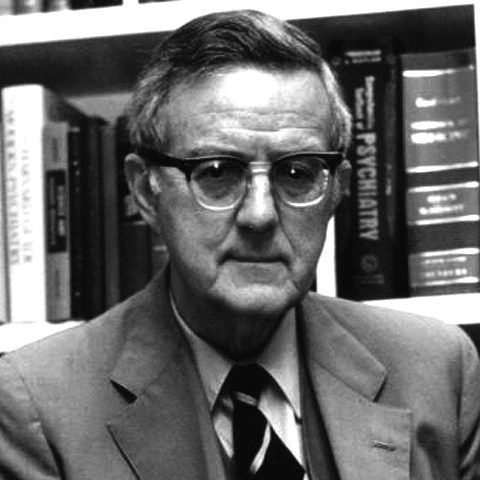
A psychiatrist with an unusual question
Ian Stevenson was trained as a medical doctor and psychiatrist, not as a religious preacher or occult writer. He built a respected academic career and eventually became closely associated with the University of Virginia, where he later led the Division of Perceptual Studies. His work moved into an unusual direction when he became increasingly interested in reports suggesting that human consciousness might not be limited to one bodily life. :contentReference[oaicite:2]{index=2}
Instead of relying on dramatic claims made by adults under hypnosis, Stevenson focused on a narrower and more specific pattern. He studied young children who, often between the ages of two and five, spontaneously spoke about another life they said they had lived before. In many of these cases, the children also displayed marked fears, attachments, behaviors, or emotional reactions that seemed unusual in the setting of their current family. :contentReference[oaicite:3]{index=3}
This choice of subject was important. Stevenson believed spontaneous childhood cases were more valuable than stories produced through suggestion, imagination, or trance. He wanted reports that arose naturally and early, before memory could become heavily shaped by later influence.
The study of children who claimed previous lives
Stevenson’s main life work became the investigation of what he called “cases of the reincarnation type.” He traveled widely and documented cases in Asia, the Middle East, Europe, and the Americas. Over time, he collected around 3,000 such cases, although only a smaller portion could be studied in the greatest detail. :contentReference[oaicite:4]{index=4}
His basic method was simple in principle, though demanding in practice. A child would make statements about a supposed former life. Stevenson would record those statements as early as possible, then investigate whether they matched the life of a deceased person unknown to the child’s family. He looked for names, places, occupations, family relations, modes of death, habits, and other specific details.
He was especially interested in cases where a child not only spoke about a former identity but also showed strong emotional continuity with it. Some children displayed intense remorse, unusual grief, phobias, preferences, or patterns of behavior that seemed connected to the remembered story. This gave the cases a psychological depth that made them more than simple anecdotes.
Birthmarks, birth defects, and physical correspondences
One of the most debated aspects of Stevenson’s work was his study of birthmarks and birth defects. He reported a number of cases in which a child’s marks or bodily abnormalities appeared to correspond to wounds or injuries said to have belonged to the deceased person whose life the child claimed to remember. In some instances, he tried to compare these reports with medical records, autopsy reports, or witness testimony. :contentReference[oaicite:5]{index=5}
This line of research pushed his work beyond the question of memory alone. Stevenson suggested that if such correspondences were genuine, they might indicate that something from one life could carry into another in a way not fully explained by heredity or environment. He did not present this as a final proof. Rather, he treated it as a serious anomaly that deserved investigation.
From a Spiritist perspective, such cases naturally raise questions about the relationship between the spirit and the body, including the possible role of the perispirit in transmitting certain impressions or marks across incarnations. Stevenson himself, however, usually wrote in more restrained and empirical terms.
A cautious researcher, not a simple propagandist
Although Stevenson is often presented either as a defender of reincarnation or as a fringe figure, his own published stance was more cautious than both caricatures suggest. He repeatedly said that the cases he documented were “suggestive” rather than mathematically conclusive. He did not claim to have forced belief upon the reader. Instead, he argued that the accumulated evidence deserved to be taken seriously and could not be easily dismissed by simplistic explanation. :contentReference[oaicite:6]{index=6}
This caution is one reason his work still attracts attention. Stevenson did not write like a sensationalist. He tended to favor precise case records, long comparative studies, and careful phrasing. He knew that extraordinary claims would be judged harshly, and he tried to present his material in a way that invited examination rather than emotional reaction.
That said, his conclusions still moved toward a real possibility of afterlife continuity. He regarded reincarnation as one possible explanation that, in some cases, seemed stronger than chance, fraud, or normal information transfer.
Major books and intellectual legacy
Stevenson’s best-known book is Twenty Cases Suggestive of Reincarnation, first published in 1966. He later expanded his work through many articles and larger studies, including books devoted to birthmarks and birth defects. His research became foundational for later investigators at the University of Virginia, especially those who continued studying children reporting memories of previous lives after his death. :contentReference[oaicite:7]{index=7}
His importance lies not only in the cases themselves, but in the model of research he established. He showed that unusual claims could be approached systematically, that interviews and records mattered, and that emotional or spiritual questions did not have to be treated carelessly.
In this sense, Stevenson occupies an unusual position. He was not primarily a philosopher of Spiritism, nor a conventional laboratory scientist. He was a disciplined collector of difficult human cases, working in an area where medicine, psychology, memory, trauma, and spiritual interpretation all intersected.
Criticism and controversy
Stevenson’s work has always been controversial. Critics argue that childhood testimony can be shaped by family belief, suggestion, selective reporting, cultural expectation, or ordinary errors of memory. Others point out that even when many details match a deceased individual, the leap from similarity to actual reincarnation is still philosophically large.
These objections are serious, and Stevenson knew it. That is one reason he emphasized documentation so heavily. He tried to record what the child said early, to distinguish stronger cases from weaker ones, and to avoid presenting every report as equally persuasive.
Even so, the debate has never been settled. For some readers, Stevenson assembled one of the strongest bodies of evidence challenging strict materialism. For others, he gathered an impressive archive of unusual stories without proving the conclusion he considered most plausible. :contentReference[oaicite:8]{index=8}
Why Ian Stevenson still matters
Ian Stevenson still matters because he treated one of the deepest human questions with patience, seriousness, and long-term discipline: can something of personal identity continue from one life to another?
He did not answer that question in a way that ended controversy. But he changed the discussion. Instead of leaving reincarnation only to religion, folklore, or speculation, he tried to examine it through recurring human cases that could be compared and documented. That effort made him one of the most important modern figures in the study of survival and rebirth.
For readers interested in the destiny of the soul, the continuity of personality, and the mysteries surrounding human consciousness, Stevenson remains impossible to ignore.