
Andrew Jackson Davis: A Precursor to Modern Spiritualism
Andrew Jackson Davis is often regarded as a precursor to modern Spiritualism. His writings and experiences appeared shortly before the events associated with the Fox sisters and helped prepare the intellectual and cultural ground for the later development of spirit communication.
He is known for describing the spiritual world in structured terms and for presenting ideas about the continuity of the soul beyond physical death.
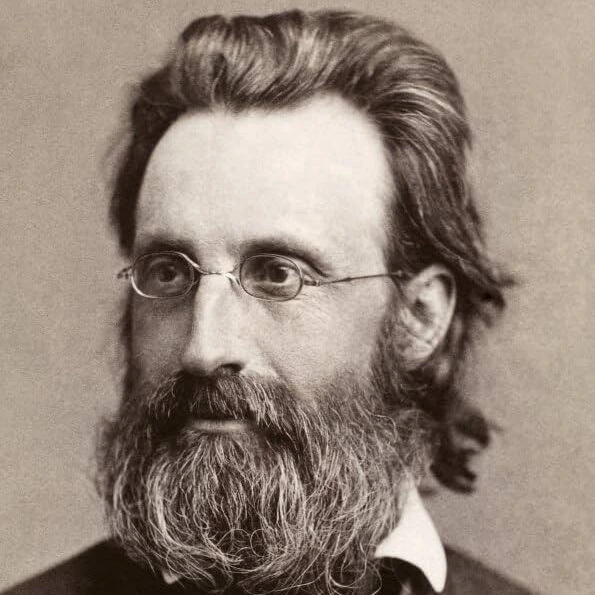
Who was Andrew Jackson Davis?
Andrew Jackson Davis was born in the United States in 1826 and became known as a writer and visionary associated with early spiritualist thought. He had little formal education, yet he produced extensive writings that attempted to describe the structure of reality beyond the physical world.
His work emerged at a time when interest in mesmerism, magnetism, and altered states of consciousness was growing, providing a context in which his ideas could develop.
Visions and trance states
Davis reported entering trance-like states in which he claimed to perceive information beyond ordinary awareness. In these states, he described the nature of the spiritual world, the structure of existence, and the progression of the soul.
These experiences can be related to what Spiritism later described as forms of emancipation of the soul, where perception is less limited by the physical body.
The Principles of Nature
Davis’s most well-known work, The Principles of Nature, presents a broad vision of the universe, combining elements of philosophy, spirituality, and early scientific thinking.
In this work, he attempted to explain how the physical and spiritual worlds are connected, and how human beings fit into a larger process of development and progression.
A bridge between mysticism and Spiritualism
Davis occupies a unique position in the history of spiritual thought. He stands between earlier mystical traditions and the more structured movement that would follow with the Fox sisters and later Spiritism.
His work did not focus on communication with spirits in the same way as later mediums, but rather on describing the nature of existence and the continuity of life beyond death.
Connection to Spiritist ideas
Although Davis was not part of Kardec’s codification, many of his ideas resonate with later Spiritist concepts, including the survival of the soul, the existence of the spiritual world, and the idea of gradual development across different stages of existence.
In this sense, his work can be seen as part of the intellectual background from which Spiritism later emerged.
Why Andrew Jackson Davis still matters today
Andrew Jackson Davis remains important because he represents a transitional figure—someone who helped shift spiritual thought from isolated mystical experiences toward a more systematic exploration of life beyond death.
His work raises questions about perception, consciousness, and the possibility that human awareness can extend beyond the limits of the physical body.
Selected writings
- The Principles of Nature – a visionary work describing the structure of reality and spiritual existence
- The Great Harmonia – a multi-volume work exploring philosophy, spirituality, and human development