
William Crookes: Science Meets Mediumship
William Crookes was a British scientist and chemist known for his work in physics and chemistry, but also for his controversial investigations into mediumship and physical phenomena associated with the spirit world.
Unlike many observers of his time, Crookes approached these phenomena with a scientific mindset. His work represents one of the earliest serious attempts to examine the boundary between science and the spiritual world.
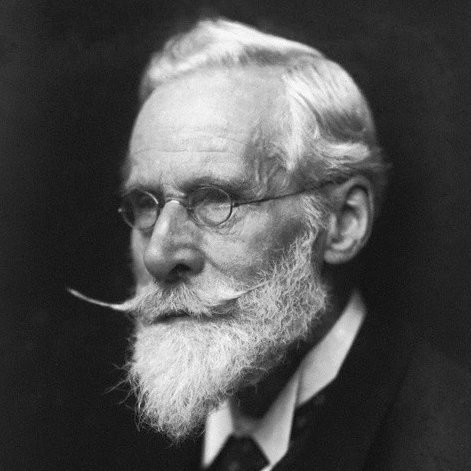
Who was William Crookes?
William Crookes was an accomplished scientist, known for discoveries such as the element thallium and for his work with cathode rays. He was a respected member of the scientific community and served as president of the Royal Society.
This background is crucial, because it shows that his interest in unusual phenomena did not come from superstition, but from a willingness to investigate unexplained observations.
Why did he study mediumship?
In the late 19th century, reports of physical phenomena associated with mediums attracted public attention. Crookes decided to examine these claims using controlled observation and scientific reasoning.
He was particularly interested in cases where physical effects appeared to occur without direct contact, which related closely to what would later be described as physical mediumship.
Investigations and experiments
Crookes conducted experiments with several mediums, including Daniel Dunglas Home. He attempted to observe, measure, and document the phenomena under conditions that reduced the possibility of fraud.
Among the phenomena he studied were:
- Movement of objects without visible cause
- Changes in weight or force
- Apparitions and materializations
He also explored the role of subtle forces, which in Spiritist terms would later be associated with the action of fluids and the perispirit.
The case of Katie King
One of the most controversial aspects of Crookes’ work involved the materialization of a figure known as Katie King, associated with the medium Florence Cook.
Crookes reported observing what appeared to be a distinct form separate from the medium’s body. This case became one of the most debated examples of physical manifestation in the history of psychical research.
Supporters saw it as evidence of genuine interaction with the spirit world, while critics argued that it could be explained by deception or experimental limitations.
Science and controversy
Crookes’ involvement in the study of mediumship was not without consequences. Many of his scientific colleagues were skeptical or critical of his conclusions, and his reputation was affected by his willingness to engage with such topics.
This tension highlights a broader issue: how far science can go when investigating phenomena that challenge established frameworks.
Connection to Spiritist ideas
Although Crookes was not a Spiritist thinker, his work intersects strongly with Spiritist concepts. His investigations touched on questions about the nature of mediumship, the interaction between spirit and matter, and the structure of unseen reality.
In Spiritism, such phenomena are not seen as supernatural, but as expressions of natural laws not yet fully understood.
Why William Crookes still matters today
William Crookes remains important because he represents a rare attempt to bridge two worlds: rigorous science and the study of phenomena traditionally considered outside its scope.
His work does not provide final answers, but it raises essential questions about the limits of material explanations and the possibility that reality extends beyond what is immediately observable.
For anyone exploring mediumship, consciousness, or the relationship between science and the spiritual world, Crookes remains a key historical figure.