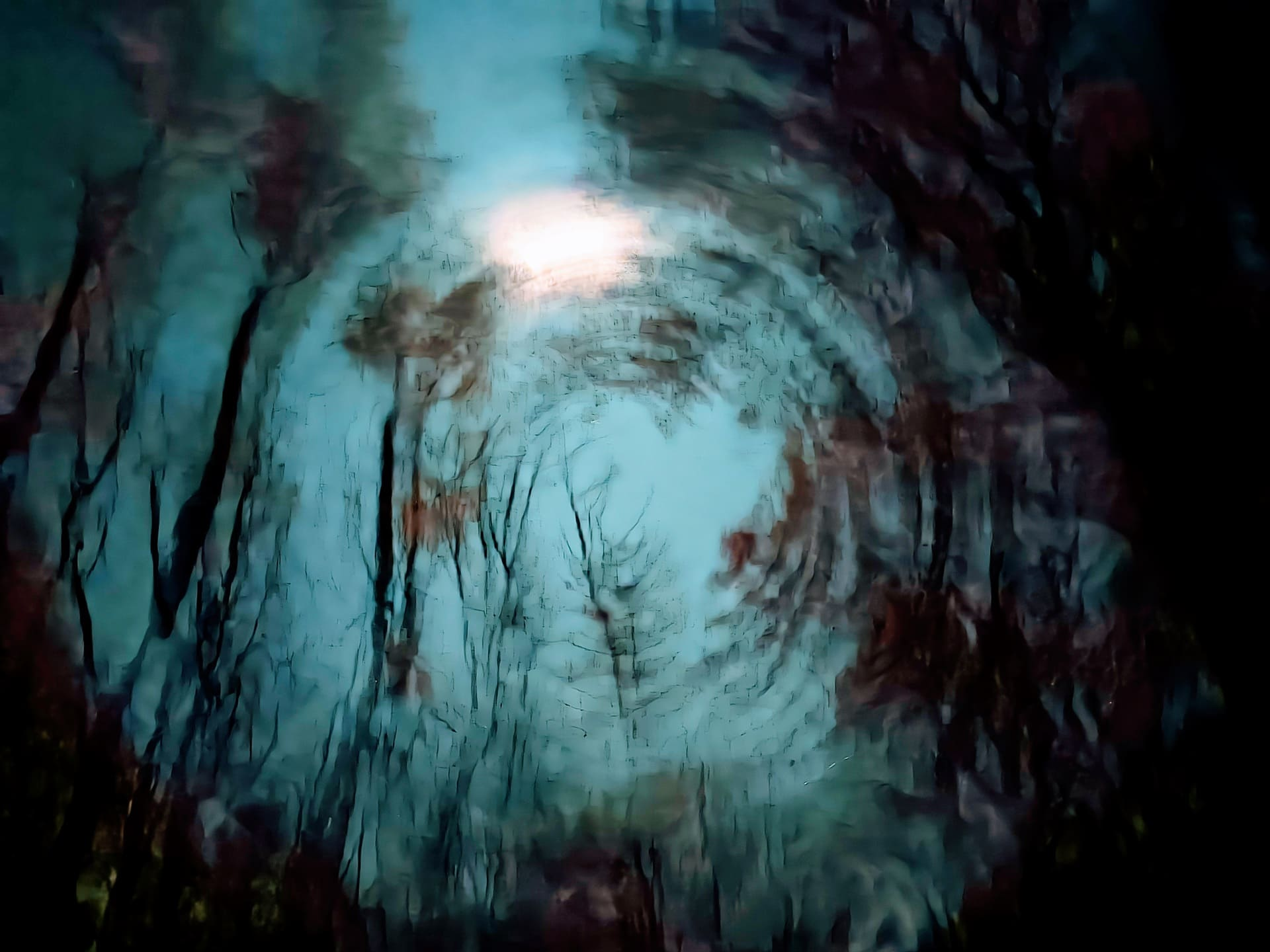
Spiritism and spiritual influences
When the Invisible World Interferes with Our Lives
Disturbing manifestations, obsession and forms of protection according to Spiritism
Knocking begins somewhere in the house even though no one is in the room. A dog growls at an empty corner, a child says they see someone at night, and objects turn up in places where no one left them. At other times, a familiar scent appears without any obvious source, or one part of the room suddenly turns cold. A single incident may have an entirely ordinary explanation. But what if the manifestations keep returning, seem to respond to the people in the house, and gradually take away their sense of safety?
Spiritism accepts that the invisible world can genuinely affect the lives of the living. At the same time, it warns against hasty conclusions, credulity and people who turn every sound into evidence of a spirit. The first task is therefore to find out what is actually happening. Only then does it make sense to speak about obsession, protection or spiritual assistance.
The knocking that launched modern Spiritualism
In the spring of 1848, knocking began in the small home of the Fox family in Hydesville, New York. The sounds occurred at night, seemed to move through the house, and the family could find no ordinary cause for them.
One evening, the two younger daughters, Kate and Maggie, decided to test the unknown presence. Kate snapped her fingers and challenged it to repeat the same number of sounds. The knocking reportedly answered. More simple questions followed, along with counted knocks and attempts to establish a basic method of communication.
Neighbors began visiting the house. The story spread quickly, and the Fox sisters later became publicly known as mediums. The events at Hydesville are often treated as the symbolic beginning of modern Spiritualism, a movement that developed several years before Allan Kardec began formulating Spiritism in France.
The story of the Fox sisters, however, has another side. Decades later, Maggie publicly declared that the knocking had been fraudulent and demonstrated how similar sounds could be produced with the joints of the feet. She later withdrew that confession. Debate therefore continues over whether the events were a trick from the beginning, whether fraud was introduced later, or whether genuine phenomena, family pressure, fame and deliberate deception became entangled in a single story.
This is precisely why the case matters so much to the present subject. It matters not only because the knocking changed the history of modern Spiritualism, but because it shows how difficult it can be to distinguish an unusual phenomenon from fraud, suggestion and the human tendency to find meaning in random events.
When something begins happening in a home, the first question should therefore not be, “Who is the spirit?” The first question is whether there is any reason to speak of a spirit at all.
How to tell whether a manifestation is really spiritual
The honest answer is that absolute certainty is very difficult to obtain in an ordinary home. A camera may record an object moving, but it cannot by itself determine who or what moved it. An audio recording may contain a voice, but it does not automatically tell us whether the source was a spirit, a neighboring apartment, a radio, a human whisper or a recording error.
That does not mean nothing can be investigated. A reasonable approach is to rule out ordinary causes first and only then examine whether the incidents display features that chance or a technical fault cannot easily explain.
Begin with a simple record
Write down the date, time, place, people present and exact sequence of events. Do not record only a conclusion such as “a spirit opened the door.” Describe that the door opened, how long it had been closed, whether a window was open, who was in the room and whether anything similar has happened before.
A record like this often reveals that the incidents coincide with a particular time, the heating system, air currents, one specific person or another recurring circumstance. In other cases, it may show a regularity that no ordinary explanation has yet covered.
A camera can help, but it is not automatic proof
A home camera, door sensor or simple motion detector may be useful when aimed at a specific place where an event keeps recurring. Two camera angles are better than one, because a single view can easily create an impression that a second perspective explains.
What matters is an uninterrupted, time-stamped recording, not a few seconds of footage separated from what happened before. A blurred shadow, an insect close to the lens, dust illuminated by night mode or a random sound is not evidence of a spirit.
What dogs and cats may indicate
Unusual animal behavior does not prove the presence of a spirit, but it may still be an important part of what is happening in a particular place. In The Mediums’ Book, Kardec allows for the possibility that animals may perceive spirits. He mentions, for example, sudden fear or a refusal to pass through a place where a person notices nothing unusual.
If a dog repeatedly growls at the same empty area, a cat watches one point in space for a long time, or both animals refuse to enter a particular part of the home, it is worth noting. It becomes more interesting if two different animals react in a similar way at different times.
Even this kind of reaction does not by itself prove a spirit is present. Dogs and cats hear, smell and detect stimuli that humans miss. There may be an animal behind the wall, a high-pitched sound, an air current or an unusual odor. A sudden behavioral change may also be related to pain, fear or a neurological problem.
An animal is not a living ghost detector. Do not force it to approach the place, and do not repeatedly provoke the reaction as a test. Treat the behavior as one circumstance to compare with what people experience in the same location and with what can be physically checked.
A manifestation that appears intelligent carries more weight
Kardec distinguished between an ordinary physical event and a manifestation in which some form of intelligence could be recognized. He gave greater importance to situations in which a phenomenon responded meaningfully to questions or supplied verifiable information that nobody present knew beforehand.
A single knock in a wall may have hundreds of causes. But if a sound repeatedly occurs in answer to precisely stated questions, follows an agreed method of communication and provides information that can be verified, there is more reason to examine the case seriously.
Even then, turning your home into a place for regular séances is not a good idea. A spontaneous phenomenon can be observed, but deliberately attempting contact changes the situation. People begin expecting a certain answer, influence one another and easily assign meaning to every sound or movement, even where none may exist. The scope for unconscious movement and deliberate fraud also increases.
Two different questions that are often confused
Even if a manifestation appears intelligent, we still do not know who is answering. These are two separate questions:
- Is an independent intelligence manifesting here?
- Is that intelligence really the spirit it claims to be?
A name proves nothing by itself. A spirit may use the name of a deceased relative, a famous person or a religious being. Kardec therefore advised people not to believe a spirit merely because of the name it gives, but to examine how it expresses itself, what it actually knows and whether its statements make sense. Long-term consistency between what it claims and how it behaves also matters.
Information that nobody present knew and that can later be verified independently may carry more weight. Even here, however, chance, prior knowledge, prompting and the possibility that the information reached the person by some other route must be considered.
Can spirits really harm people?
According to Spiritism, they can, but usually not in the way horror films portray. Spiritual influence is often subtle. It may intensify fear, reinforce a particular thought, feed resentment, interfere with judgment or persuade someone that everyone around them is lying and only an invisible guide can be trusted.
Allan Kardec used the term obsession for the persistent influence of a spirit over a person. A good spirit does not coerce, threaten or need to isolate someone from others. It may advise or warn, but it leaves the person free. Pressure, flattery and the desire for control belong to spirits that are not morally advanced themselves.
This does not mean every disturbing thought comes from a spirit. A person may be angry, suspicious, dependent or confused without any outside influence. When spiritual influence is involved, it often makes use of what is already present within the person.
A vengeful spirit can more easily strengthen resentment that already exists. A frivolous spirit can approach someone who seeks risk, provocation and sensation. A spirit trying to gain control will not usually begin with an open threat. It may flatter the person for a long time, confirm their sense of exceptional importance and gradually cut them off from people capable of asking uncomfortable questions.
Why a spirit may focus on a particular person or family
A previous relationship is not required. Some spirits may have known a person during earthly life or a prior incarnation, but others may only notice a family after coming into its vicinity.
They may be attracted by the marked sensitivity of one member of the household, an opportunity to produce physical effects, repeated attempts at communication or a strong reaction to the first events. Sometimes a spirit is attached more to a place than to its present occupants. In other cases, it simply chooses someone it can frighten, influence or keep preoccupied over a long period.
Revenge is only one possibility. Others include malice, a desire for attention, an attempt to gain control, emotional attachment or a need for help.
For this reason, it is wrong to explain every case of harassment as a karmic debt. The family may have no known past with the spirit, and there is no reason to suggest that they somehow deserve the problem.
Place-bound manifestations, poltergeists and spirit attachment
Some unexplained manifestations recur in the same place. People may hear footsteps or knocks, glimpse a figure, sense a presence or describe similar events even after a house has changed occupants. The cause, however, need not always be the same. It may involve a spirit attached to the place, repeated action by a particular spirit, or an ordinary phenomenon that has not yet been properly explained.
The word poltergeist does not identify a special kind of spirit or a separate category of spiritual being. It is a label for loud and conspicuous physical phenomena such as knocks, moving furniture, falling objects or items thrown across a room. From the perspective of classical Spiritism, such manifestations are associated mainly with lower or frivolous spirits interested in attracting attention, creating confusion or frightening people.
According to Kardec, a spirit does not need to grasp an object or touch it physically. It acts through fluids that may combine with the fluids of a person capable of facilitating physical manifestations. That person may have no idea that they possess such an ability. This may explain why activity sometimes centers on one member of a household and stops when that person leaves.
Parapsychology also considers fraud or unconscious psychokinetic activity by a living person in such cases, for example during a period of intense stress. The movement of an object therefore does not by itself reveal what caused it. It is necessary to observe whether the events recur, whether they are connected with a particular person and whether they show signs of intention or an intelligent response.
Spirit attachment is a broader and less precise expression. It may refer to a spirit that remains close to a particular person, follows them from place to place or influences their moods, thoughts and decisions. More important than the label is an exact description of what is happening, how long it has continued and under what circumstances the manifestations appear.
Online lists of symptoms are usually too general. Fatigue, poor sleep, changes of mood or relationship problems are not evidence of an attached spirit. A long-term recurring pattern, coercion, deception, loss of critical judgment or a clear connection between particular events and changes in a person’s behavior carries more significance.
Obsession, fascination and subjugation
Simple obsession
The person usually knows that something unwanted is happening. The spirit repeatedly intrudes, disrupts communication, returns despite rejection or impersonates someone else. The situation may be exhausting, but the person’s judgment remains largely intact.
Fascination
Fascination is more dangerous because the person loses the ability to judge clearly what they are receiving. The spirit may claim that the person has an extraordinary mission, is spiritually exceptional or is surrounded by enemies whenever anyone questions the communication.
A major warning sign appears when the person rejects every form of scrutiny and gradually withdraws from those who ask difficult questions. This can affect a medium, a self-proclaimed healer or anyone convinced that an invisible guide can never be wrong.
Subjugation, commonly called possession
Kardec called the strongest form subjugation or domination. In everyday speech, many people would use the word possession.
Here spiritual pressure may affect thought, the body or both. The person feels compelled to act in ways they themselves regard as harmful, senseless or humiliating.
Kardec avoided the idea that another being permanently owns the body. He spoke instead of a very powerful influence that can be resisted, although the situation may be serious and may require help from other people.
What to do depending on how far the situation has progressed
The first unusual event
- Do not try to summon anything or ask for further proof.
- Before considering a spiritual cause, check ordinary explanations such as doors, windows, drafts, heating, pipes, electrical appliances and the movement of people or animals in the home.
- Explain the situation calmly to children without unnecessary drama. Reassure them that they are safe and do not need to be afraid.
The manifestations keep returning
- Aim a camera or sensor at the specific place where the events recur.
- Observe whether they are linked to a particular person, room, object or time of day.
- Limit access by people and animals who might unintentionally affect the result.
- Ask each member of the household to describe their experience separately. This reduces the risk that their memories will influence one another.
- Stop verbally encouraging the manifestations.
The manifestation responds to people or their questions
If the activity appears to answer questions or react to those present, do not try to establish regular contact at home. A brief and clear rejection of disturbing manifestations is different from prolonged communication with a spirit whose identity and intentions are unknown.
We do not want you to disturb or frighten us. If you need help, turn to good spirits and leave this home.
This is not a spell or an exact formula with power of its own. What matters is remaining calm, speaking firmly and not showing fear. There is no need to shout, insult the spirit or provoke it into further activity.
If specific messages begin to appear, do not assume they are true. Verify only information that can genuinely be checked, and never follow instructions that frighten someone, separate them from their family, pressure them to spend money or direct them toward dangerous behavior.
What if the spirit does not want to harm anyone but needs help?
According to Spiritism, this is also possible. Kardec described spirits who drew attention to themselves because they needed prayer, did not understand their own condition or kept returning to something they had left unfinished during life. Not every spirit manifesting in a home therefore intends to harm the family.
At the same time, its intentions cannot be judged only by what it says about itself. A deceptive spirit may pose as a deceased child, a relative or a suffering soul in order to gain trust and create an opening for further communication. A request for help does not by itself confirm either identity or good intentions.
If you believe the spirit genuinely needs help, you may say a short prayer for it and ask good spirits to assist it. At the same time, state clearly that it must not frighten or wake anyone in the home or demand further contact. If the manifestations continue, do not develop the communication further. Contact an experienced Spiritist center.
The problem is now affecting everyday life
If the family can no longer sleep, children are afraid to be alone, people are accusing one another or someone hears commands to act dangerously, stop all experiments at home and begin addressing the situation with help from others.
If remaining in the house has become extremely distressing or someone may be injured, it may be sensible to stay elsewhere for several nights. Depending on the circumstances, it is also appropriate to consult a doctor or psychologist while beginning to look for serious spiritual assistance.
When a child sees or hears the manifestations
It does not help a child to dismiss the experience immediately with words such as “you only imagined it” or “you made that up again.” It is equally unhelpful to confirm at once that the child really saw a spirit. A better response is: “I believe that you saw or heard something and that it frightened you. You are safe, and we will find out together what happened.” This shows that the experience is being taken seriously without deciding in advance what the child encountered.
Ask open questions such as “What happened?” or “What did you hear?” Do not put the idea into the child’s mind with questions such as “Was it a ghost?” and do not make the child repeat or perform the story for visitors, a medium or a camera. A child should not be used as an intermediary or encouraged to speak to the presence.
For a time, the child may sleep with a parent or in another room if frightened. This is not confirmation of a spiritual cause, but ordinary support for a child who needs to regain a sense of safety. At the same time, check the room, sounds in the house, sleep, fever, medication and other ordinary circumstances.
Children may sometimes hear or see things in connection with sleep, imagination, stress or a medical condition, and such an experience does not automatically indicate a serious mental disorder. But if the events recur, leave the child confused, cause fear during the day, prevent sleep or include dangerous commands, consult a pediatrician or child psychologist.
Paranormal investigators and apps: what they can verify and what not to trust
The internet contains many videos in which a group of so-called paranormal investigators enters a home with cameras, apps, meters and loud commentary. They turn off the lights, begin asking questions and immediately interpret every random word or sound as a spirit’s response.
Not every paranormal investigator is automatically a fraud. An honest person may help document events, check the environment and identify recurring patterns. The problem begins when the main objective is to produce an exciting video.
When an investigation becomes a performance
A typical example is the use of apps such as Spirit Talker. Apps of this kind convert data from a phone’s sensors into words or spoken output. The appearance of a name or sentence, however, does not mean a spirit said it.
A phone does not know the intention of an invisible being. The app uses a predesigned method to turn measured values into output. If it displays the word “house,” “mother” or a name, the human mind can very easily connect that word with the situation being discussed.
The same problem applies to word generators, spirit boxes and devices that create fragments of sound from noise, radio signals or electromagnetic changes. They may provide material for further examination, but they are not reliable evidence of communication by themselves.
- The investigators arrive with a settled conclusion that a ghost or demon is in the house.
- They immediately label every fluctuation on a device as the presence of an entity.
- They fit every random word from an app into the family’s story.
- They ask leading questions and then present the expected answer as a discovery.
- They deliberately provoke the spirit, insult it or challenge it to attack.
- They bring many people and pieces of equipment, making ordinary interference impossible to control.
- They film distressed residents and pressure them into dramatic reactions.
- They show only striking clips rather than the complete unedited recording.
- They talk more about the video, followers and episode title than about the family’s safety.
A group that needs a stronger manifestation for a video may make the situation worse. If a frivolous spirit is present, it receives attention and encouragement to continue. If no spirit is present, hours of suggestive filming may create fear in the family that lasts long after the cameras have gone.
Where to find help when you do not know anyone
Begin with an established organization, not the first individual who appears in search results or on social media.
English-speaking readers can look for a national Spiritist federation, a member organization of the International Spiritist Council or a public directory of Spiritist groups. A center may not directly handle incidents in private homes, but it may be able to recommend a serious group or explain how it approaches situations of this kind.
In the first contact, briefly describe what is happening, how long it has continued and what has already been checked technically. There is no need to claim in advance that a particular spirit, curse or possession is involved.
Questions to ask before any visit
- Do you work with cases like this, or do you only hold regular meetings?
- What exactly will you do?
- Will you attempt to communicate with the spirit?
- How do you check technical, human and medical causes?
- What will the entire process cost, and could further paid visits follow?
- What happens if your method does not work?
- How do you protect the family’s privacy?
- Which organization, center or group do you work with?
It is wise to compare the answers of at least two independent people or groups. Do not allow an unknown person into your home without verifying their identity, and never leave them alone with children, a vulnerable person or personal belongings.
How to recognize a charlatan before you pay
A major warning sign is someone who claims, after only a short message, to know exactly how many entities are in the home, who sent a curse and how much its removal will cost.
It is also suspicious if the person claims that only they can help, says that you must not discuss the situation with anyone else, or announces after the first cleansing that an even stronger threat has been discovered and requires another payment.
A serious helper does not promise a guaranteed result, interpret every problem as evidence of a spirit or discourage someone from consulting a doctor or psychologist. They should be able to admit when they do not know.
The article Fake Mediums, Ghost Hunters & Paranormal Videos: What’s Real and What’s Not? examines fraud, false mediums and dramatic paranormal videos in greater detail.
When ordinary steps have not worked
If technical causes have been checked, the manifestations continue and the family has found no local help, the answer is not to conduct more and more experiments at home.
- 1. Contact several established Spiritist organizations or centers, even if they are in another city or country.
- 2. Ask for a remote consultation and a recommendation for a local contact.
- 3. At the same time, address sleep, stress, health and household safety.
- 4. If there is a risk of injury, violence or complete exhaustion, temporarily stay elsewhere and seek professional help.
Spiritual assistance does not always mean bringing a medium into the home. A serious group may recommend prayer, shared study, changes in the family’s way of communicating and work with the person around whom the manifestations are most concentrated. In some cases, it may instead conclude that any further communication with the alleged spirit would be harmful.
Prayer, burning herbs and protective objects
Kardec and Léon Denis understood prayer as a conscious direction of thought and a request for assistance, not as a magical sentence that automatically drives a spirit away.
Someone who does not feel close to religious language may understand the same step as concentration, meditation or a clear appeal for benevolent help. Sincerity and the way the person acts matter more than exact words.
Burning herbs, salt, candles, crystals and other objects may have personal or cultural meaning. They may help calm the mind, symbolically close a distressing period and restore the feeling that something has actively changed in the home.
Classical Spiritism does not attribute automatic power over spirits to these things. Kardec rejected the idea that a secret word, sign or talisman could control a spirit. What matters is the person’s thought, will and way of life.
This does not mean that burning herbs or a crystal must be ridiculed. It means only that such things should not be sold as guaranteed weapons against an invisible being.
When the cause may be medical or psychological
Sleep paralysis can produce a highly convincing sense that someone is in the room, sitting on a person’s chest or touching them. Sleep deprivation, fever, migraine, changes in medication, intoxication and some illnesses may lead to voices or visual perceptions.
Fear also spreads easily between people. Once one family member labels a sound as a spirit, the others begin to expect it. Ordinary events acquire a new meaning, and each succeeding night strengthens the belief that the situation is becoming worse.
A medical or psychological explanation is not an insult to the person and does not automatically deny the spiritual world. It is part of a responsible investigation.
If someone hears commands to harm themselves or others, remains unable to sleep, loses contact with ordinary reality or can no longer manage basic daily life, professional help is needed without delay.
Can a spirit act outside divine law?
Spiritism rejects the idea of beings that stand outside creation and can act without any limits. A spirit may claim to be a demon, an ancient power or a lord of darkness. That does not mean it is what it says it is.
According to Kardec and Denis, spirits are human souls at different stages of development. Some may be cruel, vengeful and unwilling to change for a long time. None, however, was created for eternal evil.
The fact that God does not immediately prevent harmful action does not mean that God approves it. Just as living people may lie or hurt others, they may attempt something similar after death. They remain responsible for it, and their possibilities are not unlimited.
This idea must never be used to blame the victim. A family experiencing disturbing manifestations may not be repaying any known debt and is not required to endure the situation passively.
What to take away
Not every unexplained sound is a spirit. Not every spirit that remains nearby is hostile. And even a genuinely harmful spirit is not an all-powerful being against whom a person has no recourse.
A good response does not begin with panic or a challenge to produce another manifestation. It begins with exact observation, checking ordinary causes and protecting the people who live in the home.
If there is reason to consider spiritual influence, it makes sense to reject the harassment, stop feeding it with attention and seek help from people who do not need to turn every case into a performance.
The goal is not to obtain the most dramatic possible evidence. The goal is to restore the family’s safety, calm and ability to live normally.
Frequently asked questions
Can a spirit harass someone it never knew before?
Yes. According to Spiritism, no previous relationship is required. A spirit may be attracted by a person’s sensitivity, an opportunity to manifest, repeated attempts at evocation or a strong reaction to the first event. Sometimes it is attached to a place, and the current occupants encounter it only after moving in.
What is the strongest sign that it is not just a technical fault?
A recurring manifestation that responds meaningfully to questions or events in the room carries more weight than noise alone. If some form of communication is genuinely taking place, for example through knocks following an agreed code or with the help of a medium, specific information that nobody present knew and that can later be verified may also be significant. This could be a name, date, place, family event or the location of an object. Even such a match does not by itself confirm the spirit’s identity or rule out chance, forgotten information or another way in which the information may have reached those present.
Is it worth installing a camera?
Yes, when it is used to examine a specific recurring event. Two angles, uninterrupted footage and controlled access to the area are ideal. A camera may confirm movement or human interference, but it cannot determine a spiritual cause by itself.
Should I call paranormal investigators?
In most cases, no. Many such groups can do little more than record the manifestations and have no experience in actually helping a family or individual. Some are primarily looking for dramatic footage and sensation, which can make the situation worse.
If you do contact such a team, it should consist of experienced and trustworthy people who first check ordinary causes, respect privacy and do not provoke the spirit. Ideally, the team should also include an experienced medium whose abilities and methods have been tested over time. Cameras, apps and measuring devices may record something, but they usually do not help a family resolve the problem. It is generally safer to approach a serious Spiritist center or group with real experience of similar cases.
Can a spirit follow me home?
Spiritism accepts this possibility. A spirit may become interested in a particular person and follow them to another place even if they did not know each other in the past. One unpleasant experience after visiting a cemetery or old house is not enough, however. What matters is whether the manifestations genuinely recur and form a recognizable pattern.
How can I find serious help when I do not know anyone?
Begin with a national Spiritist federation, a member organization of the International Spiritist Council or an established center. Ask whether they work with cases of this kind and whom they recommend. Verify identity, methods and cost, and compare at least two independent opinions.
How can I tell that someone is a charlatan?
Warning signs include a quick claim about a demon or curse without examining the situation, a large payment in advance, instructions not to speak with family members or a doctor, and an endless sequence of paid cleansings. A serious person admits uncertainty, does not create dependency and does not promise a guaranteed result.
Will prayer, burning herbs or a crystal help?
According to Spiritism, prayer may help redirect thought and ask for benevolent spiritual assistance. Burning herbs and protective objects may have symbolic meaning and help calm a person. They should not be treated as automatic weapons that will always force a spirit to leave.
Can dogs or cats perceive a spirit?
Kardec allowed for this possibility and associated it, for example, with an animal’s sudden fear or refusal to pass through a particular place. Animals also perceive sounds, smells and movement that people miss, and unusual behavior may have a medical cause. Repeated reactions by more than one animal to the same place are an interesting circumstance, not independent proof of a spirit.
What should I do if a child says they see or hear something?
First remain calm and find out whether it was a single experience while falling asleep, a nightmare, a sound from the surroundings or something that recurs under the same circumstances. Do not tell the child either that everything is invented or that they definitely saw a spirit. The important thing is for the child to feel safe and not be encouraged to make further contact. If the fear returns, disrupts sleep or interferes with ordinary functioning, discuss the situation with a pediatrician or child psychologist while also checking the environment in which the experiences occur.
What if a confused spirit needs help?
That is possible. You may calmly say that you hope it finds help and ask good spirits to assist it. At the same time, clearly refuse further disturbance or pressure. Do not begin long conversations at home simply because the presence claims to be a suffering soul. A deceptive spirit may exploit compassion, and its identity cannot be accepted solely on the basis of what it says.
Sources and further reading
- Allan Kardec, The Spirits’ Book, sections on errant spirits, the influence of spirits on thought and action, talismans and prayer.
- Allan Kardec, The Mediums’ Book, chapters on spontaneous physical manifestations, intelligent manifestations, haunted places, obsession, the identity of spirits, mediumship in animals and charlatanism.
- Allan Kardec, Revue Spirite, selected texts from 1860 and 1862 on physical manifestations, fraud, the intelligent character of phenomena and obsession.
- Allan Kardec, Genesis According to Spiritism, the section on obsession and possession.
- Allan Kardec, Heaven and Hell, the chapter on demons according to Spiritism.
- Léon Denis, Après la mort (After Death), sections on less advanced and suffering spirits.
- Bryan Williams and Annalisa Ventola, Poltergeist Phenomena: A Primer on Parapsychological Research and Perspectives.
- Carlos S. Alvarado and Nancy L. Zingrone, Characteristics of Hauntings With and Without Apparitions.
- Historical materials on the Fox sisters and the events at Hydesville in 1848.
- Spirit Talker, official description of the app’s operation and use of phone sensors.
- Imants Barušs, Testing Cell Phone Applications Used for After-Death Communication.
- International Spiritist Council, member organizations and national Spiritist federations.
- Directory of Spiritist Groups, a public directory of English-speaking Spiritist groups.
- NHS, professional information on sleep paralysis and hallucinations.
- American Academy of Child and Adolescent Psychiatry, information for families about children who hear voices or see unusual phenomena.
- VCA Animal Hospitals, information on sensory perception, stress and unusual behavior in dogs and cats.
- Centers for Disease Control and Prevention, professional information on carbon monoxide poisoning.